
Types of license
UK Gambling Licensing & Regulation Guide 2026 UKGC Explained
If gambling itself is causing difficulty, please see our responsible gambling page for free, confidential support. UK licensing conditions have tightened significantly, making Britain one of the most protective markets in the world. Each of our reviews lists the operator and licence number, verified on the public register. Casinos must verify you’re 18+ and confirm your identity (KYC), which protects against under-age gambling and fraud, and keeps your account secure.
Should there be mandatory limits (default limits for time and monetary thresholds) on machines accepting direct cashless payments? The Commission will conduct a future review of the gaming machine technical standards. However, there is no uniformity across land-based machines as a whole. The cooling-off periods require players to temporarily take a break before continuing their session on that gaming machine. There are existing limits which can be set on machines, as well as cooling-off periods for when these limits are hit.
Types of license
442.These sections provide the Secretary of State, Scottish Ministers and licensing authorities with powers to place conditions on premises licences. Licensing authorities are given the power to decide not to issue further casino premises licences in their area. 428.Applications for premises licences must be made to the licensing authority in whose area the premises are wholly or partly situated; and must be in the prescribed form and manner, accompanied by the prescribed fee.
Therefore, this option would need to be accompanied by a requirement that Category B3 machines in these venues would have certain player safety controls, such as staff alerts where a player meets spend or time limits. Without any requirement in law for a balanced offer, it is possible that this option would result in Category B machines becoming the only product on offer. In addition, there would be limited opportunities for operators to meet customer demand for Category B machines and increase GGY. It is possible that operators could use inaccessible tablets and in-fill machines to increase the overall number of Category B3 machines in their venues, undermining the principle of a balanced offer of higher and lower stake machines giving genuine choice to the customer. However, we are aware of the possibility that some operators may attempt to maximise their number of Category B cabinets above and beyond that intended by the 50/50 proposal by siting tablets which are not genuinely accessible or in-fill machines in their venues.
By contrast, industry responses argued that Option 2 would be highly restrictive for many operators and would overall provide less commercial flexibility than is currently available under the 80/20 ratio. The only responses which challenged the risk of gambling-related harm under Option 3 came from respondents within the arcade and bingo sector. Therefore it is likely that increases in Category B machines will lead to slight increases in sessions with greater losses. By contrast, under Option 2, the same operator reported that it would be required to increase the number of Category C machines, resulting in increased costs.
Annex A: List of responding organisations who agreed to attribute their response to their organisation
The Gambling (Premises Licence Fees) (England and Wales) Regulations 2007 established the maximum level of fees that local authorities in England and Wales can charge for gambling premises licences. A premises licence is required to operate a non-remote premises-based gambling business. To support their role, licensing authorities collect premises licence fees for applications and annual renewals to cover the cost of administration of their gambling duties and gambling enforcement. As set out in the white paper, we believe that a more precautionary approach is justified for slot-style games which mirror the mechanics of adult-only gaming machines, particularly those which pay out cash. Should there be voluntary limits (the ability for customers to set time and monetary thresholds) on gaming machines accepting direct cashless payments? This standard applies to feasible B3 gaming machines and provides players with a 30 second cooling-off period once voluntary limits are hit.
As outlined, the Gambling Commission has expressed concern regarding the adherence of operators to ‘available for use’ guidance. The increased flexibility will provide operators with more scope to make commercial decisions relating to energy consumption and customer demand. Under the scenario outlined in Option 1, it is expected that there will be a significant increase in commercial flexibility for operators across both bingo halls and AGCs.
On 8 December 2020, the UK Government announced a long-awaited review of British gambling laws and a call for evidence to inform the potential extent of changes required to the Gambling Act 2005 in order to make the legislative framework “fit for the ‘digital age’”. In addition to the LCCP, the British regulator also publishes a large body of literature comprising regulatory advice, policies and guidance which licensees are expected to take account of.The financial regulation of gambling is set out mostly in the British Finance Acts and provides for various levels of duty upon different types of gambling. Local authorities (for Premises Licences).Sports/horse race betting (if regulated separately to other forms of betting)As above.As above.Fantasy betting (payment to back a ‘league’ or ‘portfolio’ selection over a period of time, for example in relation to sport)As above.As above.LotteriesLotteriesThe Gambling Commission.The Gambling Commission (for Operating Licences). In July 2026, the Gambling Commission faced backlash for newly announced affordability and responsible gambling checks, which critics described as “rushed, flawed and hugely problematic”. The demise of this site raised questions of the ability of the Commission to protect UK customers from rogue traders, although overall responsibility for UK online regulation was only given to the UKGC in November 2014.
The Gambling Commission will also undertake a review of gaming machine technical standards, to include assessment of the role of session limits across Category B and C machines and the role of safer gambling tools. While online operators are able to track play precisely and apply more tailored player protections, land-based casinos have adopted a range of measures in recent years that have enhanced player protections and tracking. Casinos originally licensed under the 1968 Act are limited to a maximum of 20 gaming machines of Category B, C and D if at least one machine is Category B, or an unlimited number of Category C and D machines. The sectors which pay these fees are casinos, bingo halls and bingo-licensed arcades, adult gaming centres, family entertainment centres and betting shops. Licensing authorities (local authorities in England and Wales and licensing boards in Scotland) are responsible for licensing gambling premises, in parallel with the Gambling Commission licensing of operators.
The UK Gambling Commission banned all credit card use for gambling. The casino verifies your age and ID at signup, but your first withdrawal often triggers extra checks on your payment method. Our best practical advice is to set a firm budget with casinos not on gamstop stop-loss/cash-out limits, and remember that casino-wide payout stats don’t translate to your specific game or short session. Don’t treat game or casino payout percentages as a promise. Make sure your name, address, and other casino account details match your ID. Our tips can help you avoid frustrations that stem from misunderstanding bonus conditions, casino payout rates and other tricky terms.
- Covers high street betting shops, casinos, bingo halls and adult gaming centres.
- The current maximum amount of cash that can be inserted into a machine at one time is £50 as this is the highest denomination of bank note.
- These rates are lower than the majority of other gambling products, although remain above the at-risk and problem gambling rates for ‘any gambling activity’.
- He’s passionate about online gambling and committed to offering fair and thorough reviews.
- The benefits of this measure include the ability to assess the adherence of any given premises to these rules and identify points of failure, such as inadequate staff training.
- The changes made enable the holder of a converted casino premises licence relating to premises in England and Wales to make up to 80 gaming machines (including Category B gaming machines) available for use, provided a number of specified conditions are satisfied (“the extended entitlement”).
The vast majority of responses stated that specific safer gambling messaging should be considered within cashless gambling. We do not propose that staff alerts are required for Category D machines that accept direct debit card payments. However, we think that this is an important tool that staff could use to monitor players and therefore, it should be a feature on Category B and C machines accepting cashless payments.

Casinos in the UK are generally operated under historic licences that were rolled forward under the “new” Gambling Act 2005. Gambling operators are subject to the advertising regulations of the UK Advertising Standards Authority and the industry of the British “Industry Group for Responsible Gambling”. The LCCP imposes extensive obligations upon licensees in, amongst others, the fields of social responsibility, anti-money laundering and the prevention of terrorist financing, consumer fairness and transparency, responsible advertising and obligations to comply with various technical standards that apply in respect of both non-remote and remote forms of gambling. Originally the Gambling Act 2005 applied only to those persons who had a physical connection with Great Britain; for example, land-based gambling businesses located in Great Britain or items of remote gambling equipment located in Great Britain. GamingCasino gaming (including slots and casino table games such as roulette & blackjack)The Gambling Commission of Great Britain (“Gambling Commission”).The Gambling Commission (for Operating Licences). In January 2020, the Gambling Commission approved several organisations for these compulsory funding contributions, ensuring that operators direct their financial support to recognised entities working to mitigate gambling harms.
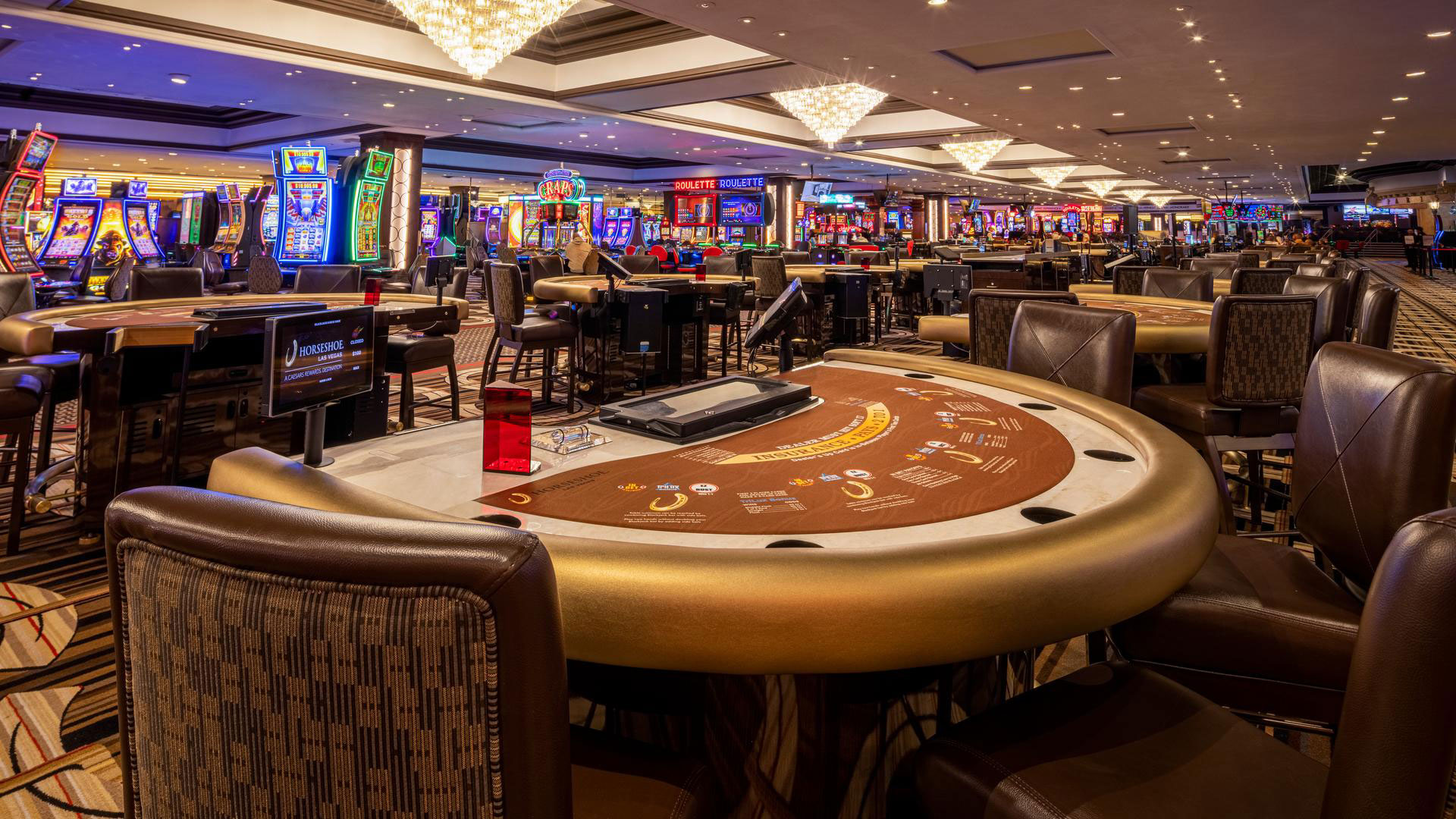
Option (1) would provide fairness and consistency across all casinos that are able to site 80 machines. We are also consulting on whether the maximum size of a 1968 Act casino’s gambling area must – like that of a Small 2005 Act casino – be less than 1,500sqm, if it resolves to exercise its entitlement to more than 20 machines (including at least one Category B machine). The tables below outline current and proposed space requirements for 2005 Act casinos, and 1968 Act casinos which seek to increase their gaming machine entitlement above 20 (including at least one Category B machine). This would ensure that regardless of the size of venue, most casinos will be able to site the same proportion of machines to tables. This would mean the introduction of a machine-to-table ratio for 1968 Act casinos that seek to increase their Category B gaming machine entitlement above 20, and a change to the machine-to-table ratio currently in place for Small 2005 Act casinos. It was also noted from the call for evidence that where other jurisdictions apply a machine to table ratio, all currently permit a greater proportion of gaming machines in comparison to Great Britain.

(a)the non-gambling area may consist of one or more areas within the premises, In this Part, where premises are required to contain a non-gambling area— In this Part, in determining the floor area of the gambling area of premises, all areas in which facilities for gambling are provided on the premises must be taken into account.
Should the operating and premises licence fees that apply to 2005 Act casinos also apply to 1968 Act casinos that increase their gaming machine entitlements? Operating and premises licence fees for 1968 Act casinos that increase their gaming machine entitlement should match the operating and premises licence fees charged for 2005 Act casinos. Do you agree with the proposal that casino operators will be required to notify licensing authorities and the Gambling Commission if they decide to take-up their entitlement to additional gaming machines under the new regime?
As part of the increase in premises fees, industry responses highlighted that they would like to see licensing authorities invest in further staff training to increase knowledge and understanding of gambling legislation, which in their view, would improve engagement. In response to the questions as to how much annual funding is needed for administration and enforcement of licences, the average amount stated by licensing authorities was £45,000. The respondents received an average of 2 premises licence applications and held an average of 44 live premises licences, per licensing authority, over the same period. By contrast, the majority of gambling operators, across all sectors (bingo, arcade, casino and betting) advocated for either no increase or a small increase of 10%. This chapter of the consultation received 40 responses, primarily from licensing authorities and gambling operators.
However, for a small percentage of players, online gambling can turn problematic and addictive. Relax and unwind while playing online gambling, a fun, leisurely activity. As already mentioned, you should always play at a UK Gambling Commission licensed online casino.
This process of formal review – Section 116 of the Gambling Act 2005 – can result in almost any sort of penalty from the regulator, including suspension and revocation of licences. Personal licences tend to have a five-year duration and must, however, be renewed. This distinction cannot be ignored, and the regulator has no power to grant a licence that authorises both remote and land-based activity.
As one of the most established brands on the market, it ranks number one in our list thanks to its high-quality games, secure and flexible banking options, and responsive customer support. We’ve scoured Reddit threads and casino help centres to find the questions UK players actually ask. Compare our full reviews for current RTP snapshots, withdrawal speeds, and bonus terms, then select the casino that matches your habits and budget. Finally, don’t gamble over public Wi-Fi and don’t disable 2-factor authentication (2FA) for your casino and email accounts.

They must also participate in GAMSTOP self-exclusion and contribute to research, education and treatment of gambling harm. Search for the operator by name or licence number and confirm the licence status shows as “Active”. Established under the Gambling Act 2005, it ensures gambling is conducted fairly, openly, and free from crime.
Exempt venues will be prevented from increasing their gambling area further, from 16 May 2024. Those opposed to the reduction preferred a larger minimum table gaming area requirement in place such as 350sqm. Some respondents used this section of the consultation to further highlight their opposition to the minimum table gaming area requirement. This section of the consultation received 43 responses.